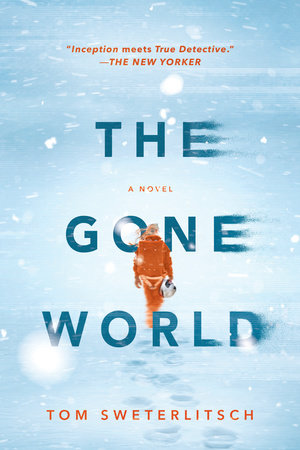
The Gone World
Synopsis
NCIS investigator Shannon Moss is assigned to a brutal family murder connected to a missing Navy SEAL and a classified deep-space program. Her work allows her to travel into possible futures to gather evidence, but those futures are temporary branches rather than secure destinations. Across them she encounters the Terminus, a recurring extinction event that appears to be moving toward the present.
Why It Fits
The novel combines procedural momentum with existential instability. Possible futures can contain entire lives and relationships yet still be erased, while the approaching Terminus turns mortality from an individual fact into a species-level horizon. The result is horror about causality, identity, and whether meaning survives when whole realities are provisional.
Key Themes
- time and causality
- human extinction
- identity across possible futures
- trauma
- determinism
- sacrifice
- apocalypse
- the reality of temporary lives
Who Should Read It
Read it if you want a fast-moving crime investigation fused with time travel, cosmic horror, and apocalypse. It is especially effective for readers who want philosophical implications but prefer them embedded in a strong thriller plot.
Editorial Note
The Gone World is a useful bridge between high-concept science fiction and horror. Its difficulty comes from temporal logic rather than experimental prose, so it can serve readers who found Blindsight or House of Leaves too structurally demanding.
Dread Index
Editorial classifications on a 0–5 scale. How the Dread Index works.
- Existential Dread
- 4 / 5
- Cosmic Insignificance
- 5 / 5
- Nihilism
- 4 / 5
- Isolation
- 4 / 5
- Identity Dissolution
- 3 / 5
- Reality Instability
- 5 / 5
- Mortality
- 5 / 5
- Philosophical Depth
- 4 / 5
- Gore
- 4 / 5
- Conventional Scares
- 4 / 5
- Difficulty
- 4 / 5
- Hopefulness
- 2 / 5
Why this score?
Temporary futures force the characters to confront whether lived experience retains meaning when a timeline can cease to exist.
Why this score?
The Terminus places individual and even species-level survival beneath a vast process that repeatedly overwhelms human futures.
Why this score?
Erased timelines and recurring extinction threaten meaning, though sacrifice and attachment continue to influence choices.
Why this score?
Moss carries knowledge of possible futures that most people cannot share, creating a persistent separation from ordinary experience.
Why this score?
Alternative futures complicate continuity and personal history, but the protagonist retains a comparatively stable core identity.
Why this score?
Branching futures, temporal travel, and uncertain causality make the status of any observed reality fundamentally provisional.
Why this score?
The investigation moves from murder to repeated visions of human extinction, making death central at both personal and species scales.
Why this score?
The thriller repeatedly raises questions about determinism, causality, sacrifice, and the moral status of temporary worlds.
Why this score?
The murder investigation and apocalyptic imagery include substantial graphic violence.
Why this score?
Crime-scene horror, pursuit, body horror, and apocalyptic suspense provide frequent concrete fear.
Why this score?
The prose is direct, but keeping track of temporal branches and causal relationships requires sustained attention.
Why this score?
Characters can act meaningfully against catastrophe, but the structure of possible futures prevents uncomplicated optimism.