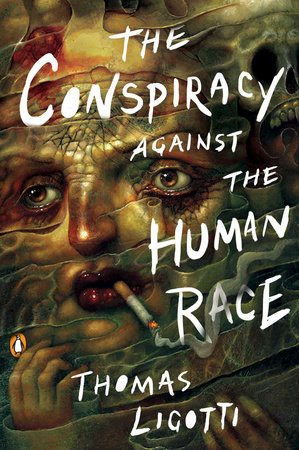
The Conspiracy Against the Human Race
Synopsis
Thomas Ligotti's nonfiction work develops a sustained case for philosophical pessimism, drawing on philosophy, literature, psychology, and horror. Rather than treating consciousness as an unquestioned good, Ligotti presents self-awareness as a condition that exposes humans to suffering while also compelling them to invent consoling stories about purpose, progress, and identity.
Why It Fits
This is not horror fiction, but it belongs at the center of an existential-horror catalog because it states directly what many fictional works imply. The frightening proposition is that existence itself may be the problem and that optimism, meaning, and even the stable self may function partly as defenses against that recognition.
Key Themes
- consciousness as a burden
- philosophical pessimism
- antinatalism
- self-deception
- suffering
- meaninglessness
- horror as worldview
Who Should Read It
Read it if you want the philosophical arguments behind pessimistic and existential horror rather than a plot. It is best for readers comfortable with essays, repeated argument, literary references, and a worldview that does not try to balance its pessimism with reassurance.
Editorial Note
Score this book as nonfiction philosophy, not as though it were a supernatural novel. Its very low gore and conventional-scare scores are not signs of mildness; the dread comes almost entirely from argument.
Dread Index
Editorial classifications on a 0–5 scale. How the Dread Index works.
- Existential Dread
- 5 / 5
- Cosmic Insignificance
- 2 / 5
- Nihilism
- 5 / 5
- Isolation
- 4 / 5
- Identity Dissolution
- 4 / 5
- Reality Instability
- 3 / 5
- Mortality
- 5 / 5
- Philosophical Depth
- 5 / 5
- Gore
- 0 / 5
- Conventional Scares
- 1 / 5
- Difficulty
- 4 / 5
- Hopefulness
- 0 / 5
Why this score?
The work directly argues that conscious existence may be an intrinsically bad condition rather than a gift to be justified.
Why this score?
Human importance is rejected, but the argument is more psychological and philosophical than cosmological.
Why this score?
Ligotti systematically challenges purpose, value, progress, and other narratives commonly used to make existence meaningful.
Why this score?
The pessimistic worldview emphasizes the separation of conscious beings inside private suffering and defensive illusions.
Why this score?
The self is treated less as a secure essence than as part of the machinery that sustains consciousness and its deceptions.
Why this score?
Physical reality remains stable, but the book attempts to destabilize ordinary interpretations of what life and consciousness mean.
Why this score?
Death, suffering, reproduction, and the continuation of conscious life are central to the argument.
Why this score?
Philosophy is the book's primary substance, not a secondary layer beneath narrative.
Why this score?
The work is nonfiction argument and does not rely on graphic bodily violence.
Why this score?
There is almost no conventional suspense or supernatural threat; the intended disturbance comes from ideas.
Why this score?
The prose is readable but the dense references, repetition, and uncompromising philosophical argument require sustained attention.
Why this score?
The book deliberately rejects consoling frameworks and offers essentially no affirmative metaphysical counterweight to its pessimism.