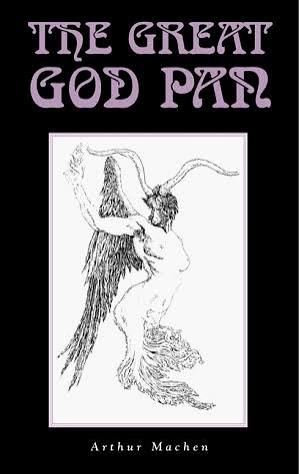
The Great God Pan
Synopsis
In a Welsh laboratory, Dr. Raymond conducts an experiment intended to expose a young woman named Mary to a hidden level of existence beyond ordinary perception. The consequences initially seem private, but later accounts of strange encounters, ruined lives, and unexplained deaths begin to suggest a deeper connection. Different witnesses piece together fragments of an influence they can neither categorize nor control.
Why It Fits
Machen makes the limits of perception the center of his horror. His characters assume that lifting a barrier between everyday experience and an unseen reality will produce knowledge, but the revelation threatens the stability of their minds and moral categories instead. The novella anticipates cosmic and weird horror without relying on the vast spaces or extraterrestrial civilizations associated with later Lovecraftian work.
Key Themes
- forbidden perception
- scientific transgression
- hidden reality
- contagious knowledge
- Victorian social anxiety
- identity and transformation
- the limits of rational explanation
Who Should Read It
Read it for a compact Victorian precursor to modern cosmic horror, sinister experiments, fragmented testimony, and the dangers of forbidden discovery. Expect indirect treatment of sexuality and violence, period attitudes, and a mystery assembled through conversation rather than sustained action.
Editorial Note
An earlier version appeared in 1890; the significantly expanded novella was published in book form in 1894 alongside 'The Inmost Light.' The page counts and covers attached to modern editions vary. This guide and its classification concern the expanded novella, not any companion material that an edition may contain.
Dread Index
Editorial classifications on a 0–5 scale. How the Dread Index works.
- Existential Dread
- 4 / 5
- Cosmic Insignificance
- 4 / 5
- Nihilism
- 3 / 5
- Isolation
- 3 / 5
- Identity Dissolution
- 4 / 5
- Reality Instability
- 5 / 5
- Mortality
- 4 / 5
- Philosophical Depth
- 4 / 5
- Gore
- 2 / 5
- Conventional Scares
- 3 / 5
- Difficulty
- 3 / 5
- Hopefulness
- 1 / 5
Why this score?
The experiment suggests that the human world rests on perceptual limitations that may be necessary for psychological survival.
Why this score?
The hidden order displaces human authority, even though the novella is more occult and intimate than cosmic-scale science fiction.
Why this score?
The discovery threatens established meaning and morality, but the narrative does not insist that all value is illusory.
Why this score?
Those attempting to understand the events work with incomplete reports and cannot rely on public institutions to interpret them.
Why this score?
Encounters with the unseen destabilize personhood and ordinary distinctions between human and nonhuman.
Why this score?
Revelation of an unseen layer of existence makes familiar assumptions about nature radically unreliable.
Why this score?
Mysterious deaths and the risk of irreversible harm are central to the unfolding investigation.
Why this score?
The narrative asks whether unrestricted perception is desirable and whether truth can be separated from its consequences.
Why this score?
Much of the violence is reported indirectly or left to implication rather than graphically described.
Why this score?
Ominous revelations and threatening incidents create Gothic suspense alongside conceptual fear.
Why this score?
Nineteenth-century style and shifting testimony require some attention, but the novella is relatively brief.
Why this score?
The characters have limited means of containing the consequences of the initial experiment.